Monday, September 17, 2012

War in Mandera continues Police Officers Injured at The Kenya-Ethiopia Border - Citizen News

The officers were part of a contigent of security personnel patrolling the Kenya-Ethiopia border  when their vehicle was hit by a remotely controlled improvised explosive device in Malkasuput area near Dawa River.
Mandera East OCPD Jackson Rotich said the first explosive device targeting four police officers on foot patrol went off at 10.30am, but none of the officers was injured. Rotich said the officers called for help and as administration police officers rushed to the scene, a second explosion occurred.
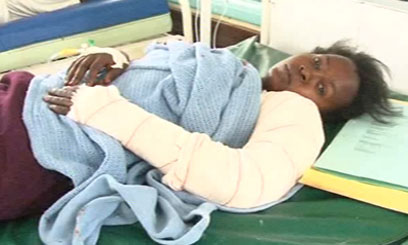
“The explosion hit their vehicle from behind seriously injuring two officers. The officers are in stable condition and they have been rushed to Mandera district hospital,” Rotich said.
He said a major operation to nab the attackers has been mounted along the Kenya-Ethiopia border.
“We have arrested several suspects who are being interrogated by my officers,” Rotich added. 
The attack on the security officers comes a day after police arrested two suspected al-qaeda linked terrorists and recovered 6 very powerful explosive-laden vests, four guns, 12 hand grenades and over 400 bullets in Nairobi’s Eastleigh estate.
Police have launched a manhunt for 8 suicide bombers suspected to have been preparing to carry out terror attacks using the weapons recovered.
Posted by Kimeli arap Kemei

Thursday, September 6, 2012

Islamic radicalism hits ancient city of Mombasa - Businessweek

MOMBASA, Kenya (AP) — Hardline Muslim clerics. Young people who feel marginalized. Suspicions that police are responsible for the killings and forced disappearances of extremists.
These elements created a combustible mixture that exploded into rioting last week after Aboud Rogo Mohammed, a Muslim preacher accused of links to an Islamist insurgent group in neighboring Somalia, was riddled with bullets as he drove his wife to a hospital for a checkup. Observers say these events underscore growing fundamentalism in Mombasa, dividing people in a city established centuries ago by Muslim traders from the Arabian peninsula, now home to many people of Arab descent and Somalis.
No one has been arrested for the Aug. 27 killing that happened in broad daylight but Mohammed's wife, who was wounded in the leg, immediately suspected the police.
"It is you policemen who have killed him, we don't want a post-mortem or any help from you," Khaniya Said Sagar told police officers who came to assist her. Mohammed was the fifth alleged Muslim extremist who has been killed or who has disappeared in the last four months.
The Masjid Musa mosque where Mohammed preached weekly became ground zero of the rioting over two days in which four people, including three members of the security forces, were killed and three churches were damaged. Hundreds of angry young Muslims who took to the streets blamed police for the killing of Mohammed.
"There is growing religious fundamentalism in Mombasa that is reaching to certain heights that were not there (before)," said the Rev. Wilybard Lagho, a Catholic priest who is the chairman of the Coast Inter-Faith Council of clerics, a forum which brings together clerics from several faiths to discuss common concerns. "Extremism divides people as 'we versus them' and that brings tension."
Hassan Omar Hassan, a former deputy head of the government-funded Kenya National Commission on Human Rights, knew Mohammed, and said the cleric became more outspoken and adopted a hardline stance after he emerged from prison. Mohammed had been jailed for the December 2002 killing of 13 people in a bomb attack of an Israeli-owned hotel at the Kenyan coast and the attempted downing of a jetliner packed with Israeli tourists. Mohammed was charged with murder but was acquitted in a trial.
"It was at that point that I started to hear Mohammed, after imprisonment, becoming more and more audacious. It appears when he was imprisoned he overcame the fear of adversity," Hassan said. "He started preaching on international jihad, and subscribed broad ideologies of jihad."
Police said Mohammed had belonged to a terror cell affiliated with al-Shabab that was planning to bomb Kenyan targets over Christmas. Al-Shabab is an Islamist insurgent group in Somalia that has executed people by stoning and chopped off limbs of suspected thieves. Kenyan troops are among the African Union forces backing the Somali government, and are on the verge of attacking al-Shabab's last stronghold, the Somali seaside city of Kismayo.
Mohammed's death exposed and exacerbated a schism between the Muslim faithful in Mombasa, which boasts an architectural mix of mosques and minarets from Arab traders, British colonial-style buildings and more recently built high-rises. The mix of disparate cultural influences is evident in the clothing people wear here, from Arab-style robes, hijab headscarves and burqas to hip-hop style outfits complete with sagging jeans, short skirts and tights.
There are worries that the rise of extremism here will upset the tradition of peaceful coexistence between Christians and Muslims and will hurt this city's important tourism industry.
Youths who were protesting Mohammed's death ignored calls by their local imams, or preachers, to stop the violence, said Hashim Kamau, National Youth Chairman for the Supreme Council of Muslims in Kenya. Kamau said in an interview that he was sent from Nairobi to calm the youths.
Human rights campaigners say it is the Kenyan government's harsh counterterrorism measures that are pushing Muslim youths toward extremism. Last week's riots were a culmination of anger building up against the Nairobi government because of the killings and disappearances of five Muslim figures, they say.
"This is a society that has been victim of the government's counterterrorism measures," Hassan said. "We have Gestapo kinds of raids in this town. We have had a total flotation of the constitution, sheer disrespect and carelessness on the part of the police officers on how they deal with the sensitivities of the Muslim community and profiling."

4 Kenyan police wounded in grenade attack - Boston.com

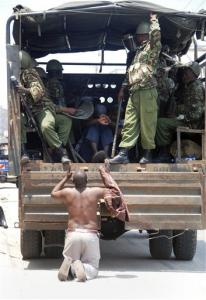
A Muslim man kneels as riot police detain Muslim youths who were pelting police with stones outside the Masjid Musa Mosque in Majengo, Mombasa, Kenya, Tuesday, Aug. 28, 2012. Police and protesters fought running battles as a violent backlash to the killing of a radical Islamic preacher Aboud Rogo Mohammed, continued Tuesday in Kenya's second-largest city of Mombasa, which left several people hospitalized, police and human rights officials said.A Muslim man kneels as riot police detain Muslim youths who were pelting police with stones outside the Masjid Musa Mosque in Majengo, Mombasa, Kenya, Tuesday, Aug. 28, 2012. Police and protesters fought running battles as a violent backlash to the killing of a radical Islamic preacher Aboud Rogo Mohammed, continued Tuesday in Kenya's second-largest city of Mombasa, which left several people hospitalized, police and human rights officials said. (AP Photo)
By Tom Odula
Associated Press / August 29, 2012
Text size  +
  •  0

  •  96
MOMBASA, Kenya—A grenade attack wounded four policemen in the latest outbreak of violence in Kenya's coastal city of Mombasa, ending what had seemed to be a lull in violence stemming from the killing on Monday of a radical Islamist preacher, a police officer said late Wednesday.
A hand grenade was hurled into a police van carrying several security officials who were patrolling the precincts of Mombasa Pentecostal Church, critically wounding three of them, police officer Kipkemboi Rop said.
The grenade attack shattered the relative calm that had started to spread over the city on the third day after the killing of Muslim cleric Aboud Rogo Mohammed, who had been sanctioned by the U.S. and U.N. for his alleged support for al-Shabab, an al-Qiada-linked militant group in Somalia. He was shot to death by unidentified gunmen Monday morning as he drove in his car with his family. His wife was wounded in a leg.
Businesses reopened Wednesday morning in most parts of Mombasa after youths rioted for two days, angered over the killing of a hardline Muslim cleric.
The rioting on Monday and Tuesday had brought this vibrant city, Kenya's second-biggest, to a near standstill, left four people dead and several churches and businesses damaged, but some businesses had reopened Wednesday.
Police reinforcements helped contain attempts by youths from the populous Majengo area to continue with the protests for a third day.
Prime Minister Raila Odinga, addressing an interfaith meeting at Nyali Beach in Mombasa, said leaflets were circulating in Mombasa and Nairobi, claiming he was behind the killing. Odinga said the leaflets allege that he went to Israel and hired mercenaries who came to eliminate Mohammed, who was facing several terror-related charges.
Odinga denied the claims. The premier also confirmed that the government will compensate churches and businesses that were looted or burned during the protests.
Youths started to erect roadblocks of burning tires Wednesday but were chased away by police using tear gas and batons. Paramilitary and regular police patrolled Majengo on trucks while others carried out door-to-door searches for suspected looters and rioters.
Two dozen people arrested on Tuesday in the riots were arraigned in a Mombasa court Wednesday. They were charged with two counts of taking part in an unlawful assembly and taking part in a riot and were to be taken to Shimo la Tewa prison pending a ruling on their bond terms.
Hassan Joho, a member of parliament for the Kisauni area, where a grenade was thrown Tuesday into a truck full of security officers going to stop protesters from burning a church, urged his constituents to maintain peace. He said that if paramilitary police known as the General Service Unit, who have a reputation for brutality, are deployed to their area, they won't discriminate between rioters and those who are not involved in chaos.
Two prison guards who were wounded in the grenade attack died Wednesday, said James Kodiany, the Coast regional prisons boss. Another guard died on Tuesday in the grenade attack. A civilian was killed on Monday in the rioting.
At the scene of Mohammed's killing, his wife had angrily accused police of the murder.
"It is you policemen who have killed him, we don't want a post-mortem or any help from you," Khaniya Said Sagar told police who came to assist her.
Khaniya said that her husband had been driving her to the hospital for a checkup after she had a miscarriage two weeks ago.
The Muslim Human Rights Forum has called the shooting of Mohammed an "extrajudicial killing" and demanded an "an end to targeted killings and enforced disappearances of terrorism suspects."
But police Commissioner Mathew Iteere said that no police were involved in Mohammed's death.
Keriako Tobiko, Kenya's Director of Public Prosecutions, has formed a team to investigate the homicide made up of members of the police, the Kenya National Commission on Human Rights, the Lawyers Society of Kenya and the Independent Policing Oversight Authority.
Police had said Mohammed was part of terror cell affiliated to al-Shabab that was planning to bomb Kenyan targets over Christmas. Al-Shabab has vowed to carry out a large-scale attack in Nairobi in retaliation for Kenya sending troops into Somalia to fight the Islamist insurgents.
Mohammed was acquitted in 2005 of murder charges for the 2002 bombing of a tourist hotel near Mombasa which killed more than 12 people.
He is the fifth alleged Muslim extremist who has been killed or who disappeared in the last four months, according to human rights campaigners. One corpse was found mutilated and the other four men vanished.
The killing brought to the surface tensions in Mombasa, a city established centuries ago by Muslim traders from the Arabian peninsula and the Indian subcontinent, now home to hundreds of thousands of people of Arab descent and a large Somali population.

Monday, September 3, 2012

Kenya's President Calls For Peace in the Mobasa riot

Video


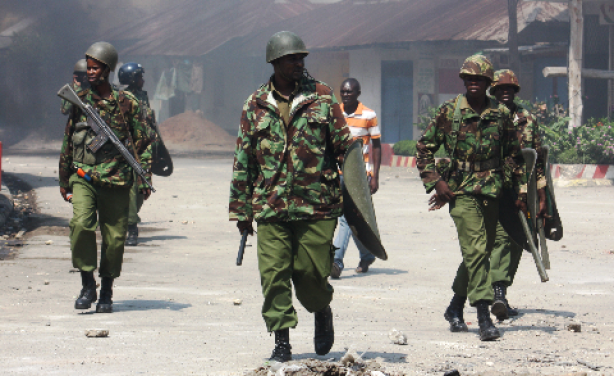
Police officer patrolling along Majengo area near Masjid Musa mosque: Muslim youths are protesting the killing of Muslim Cleric Aboud Rogo at Bamburi.

InFocus


Wednesday, August 22, 2012

NEP leaders blame Ethiopia conflict for Kenya killings -Capital News

Led by Mandera West MP Mohamed Mahamud, the group argued that Ethiopian problems were spilling over into the country, increasing the need to tighten security along the border/FILE
NAIROBI, Kenya, Aug 21- A section of leaders from North Eastern province are now blaming tribal clashes in Ethiopia for the ongoing conflict in the north.
Led by Mandera West MP Mohamed Mahamud, the group argued that Ethiopian problems were spilling over into the country, increasing the need to tighten security along the border.
Mahamud told journalists in Nairobi on Tuesday, that the conflict between the Garre and Degodia communities, over land, could only be quelled if the government stopped the two from crisscrossing the border.
“In Ethiopia, the two communities are at war and they are fighting over land. A lot of people have, as a result, been displaced in Kenya and Ethiopia and there is a lot of counter attack across the border so in hot pursuit people are dying,” he explained.
Mahamud further urged the government to deploy more security forces to man the area before the situation gets out of hand.
He noted that although 100 General Service Unit police had been dispatched to the region, they were hardly enough to contain the volatile state of affairs.
“The General Service Unit were deployed to the region in February this year, at our request, but they are not enough so we are also asking for regular police and Administration Police because we need to increase security along the border,” he stressed.
Former area MP Mohamed Abdi also claimed that some of the militia had been using Mandera town as their training base.
He emphasised the need to flash them out so as to restore peace in the region.
“The people of Mandera West, Central and East cannot communicate simply because roads have been closed and the areas have been enclaved. As a result the area has become a base for militia. These people must be ousted from Mandera County,” he said.
The group further urged local leaders to refrain from politicising the matter saying such exchanges would only makes things worse.
Mahamud added that blame games over the clashes were also retrogressive.
“These two communities have been living together harmoniously for the many years so we need to stop politicising the issue by bringing in unnecessary dimensions,” argued Mahamud.
The leaders had earlier castigated Mandera Central MP Abdikadir Mohammed accusing him of misinterpreting the matter.
They told him off for addressing the media on the issue on Monday saying there was no politics surrounding the conflict.
“We have mention of the Garre Defence Force, given by our brothers yesterday. That terminology is not known to us; it’s only known to them. Such a parliamentary and baseless statement is very serious and cannot contribute to peace,” emphasised Mahamud.
Abdi also urged the Ethiopian authorities to contain the situation on their end.